Why Kansas City's Six 2026 World Cup Matches Overdelivered
The 2026 World Cup football tournament is over, and Kansas City's slice of it was six matches at Kansas City Stadium plus a FIFA Fan Festival that drew hundreds of thousands of fans in a two-state reg...
Why Kansas City's Six 2026 World Cup Matches Overdelivered
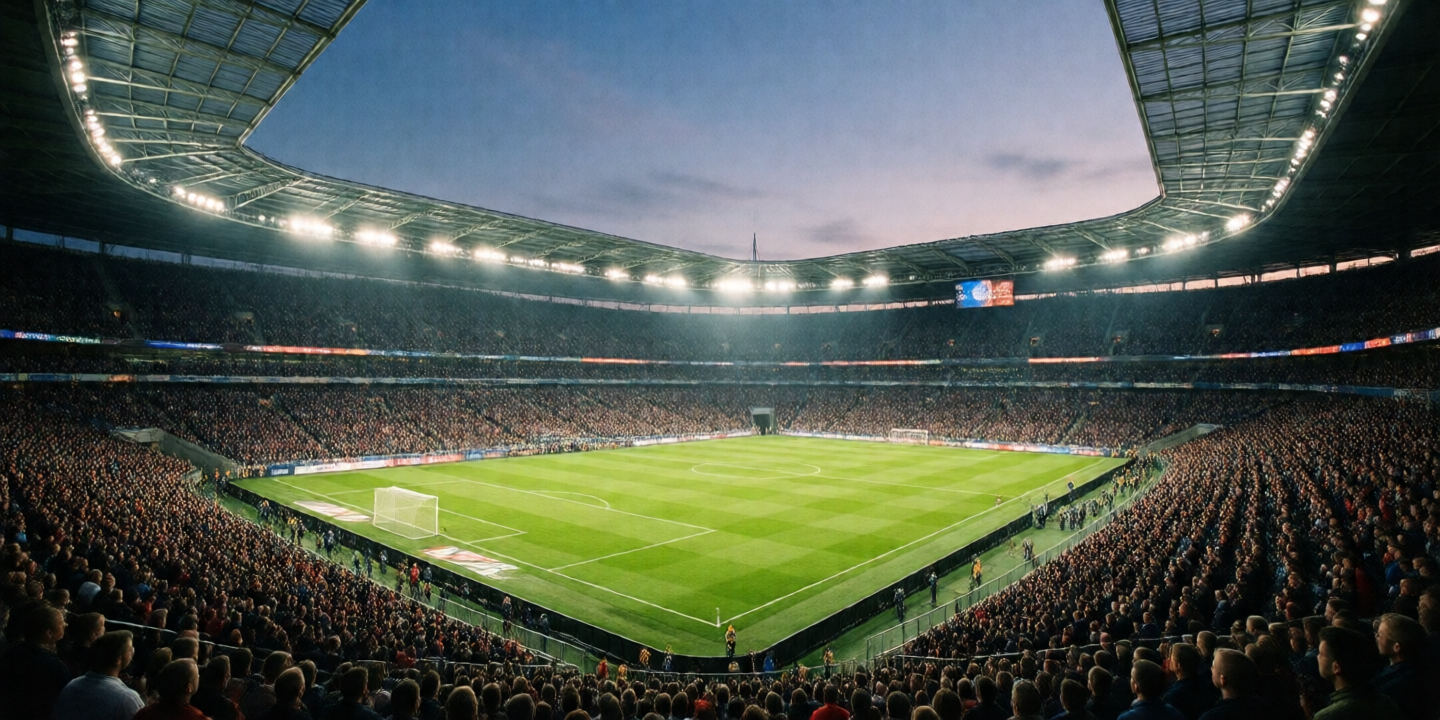
The 2026 World Cup football tournament is over, and Kansas City's slice of it was six matches at Kansas City Stadium plus a FIFA Fan Festival that drew hundreds of thousands of fans in a two-state region. Pitch Notes, a World Cup content site covering predictions, tactics and player stats, treats that footprint as a useful case study: a host city with only six fixtures gives you a small, clean sample of how match-day atmosphere, crowds and results line up. The region calls itself the Soccer Capital of America, and organizers say its impact is only beginning now that the tournament has closed. The practical takeaway is to stop chasing noise and keep a simple per-match log of venue, crowd context, result and your own stake, so you can see your real net position instead of a feeling. Start with one spreadsheet, five columns, and fill it in after every match you follow.
Be honest with me for a second, sorry if this hits a nerve. Did you finish the tournament with a vague sense that you "did okay", but no idea what your turnover actually was? I did, at least in the early rounds, and I felt a little embarrassed about it. A month of group-stage chaos blurs everything together: the late kickoffs, the upsets you swore you saw coming, the small stakes that quietly added up. Kansas City's story is oddly comforting here, because six matches and one big fan festival is a small enough canvas to actually hold in your head. I think that is the real lesson, and it is why I wanted to walk through this as five steps, the way I would explain it to a friend I was plotting a smart season with.

Ready to see how others are following the tournament aftermath? Take a look at what is on offer below.
Step 1: Pin down what Kansas City actually hosted
Before you can learn anything from a host city, you need the facts straight, so I always start there. Kansas City's official tournament site describes the run as six matches at Kansas City Stadium, backed by FIFA Fan Festival Kansas City, which it says brought together hundreds of thousands of fans to cheer for their nations and share their cultures. The organizers also published six Match Day galleries, one per fixture, and a thank-you video that closes the chapter on the region's role as a FIFA World Cup 2026 Host City. I like this framing because it separates two very different things that casual fans tend to blur together: the matches themselves, which are decided on the pitch, and the surrounding festival, which is about atmosphere and hospitality. When you read tournament coverage, ask yourself which of the two a given claim is really about. A packed fan zone is lovely, and I mean that sincerely, but it is not evidence about a team's pressing structure or a striker's finishing. Keeping those buckets apart will save you from some very expensive storytelling later on.
Here is the minimum fact sheet I keep in my own notes:
- Host city: Kansas City, spanning two states and branding itself the Soccer Capital of America
- Matches hosted: six at Kansas City Stadium, each with its own Match Day gallery
- Fan experience: FIFA Fan Festival Kansas City, with hundreds of thousands of attendees
- Status: hosting is complete, with the region now focused on legacy and impact
If you want the wider context for how the tournament was organized, the 2026 FIFA World Cup overview on Wikipedia is a decent starting point, and I have also put together a complete guide to the 2026 World Cup host cities for readers who like to compare venues.
Step 2: How do you read a host city's match-day footprint?
Read it by separating three things: the fixtures, the fan crowds and the result. Kansas City hosted six matches at Kansas City Stadium, while the FIFA Fan Festival drew hundreds of thousands of fans. Crowd size tells you about atmosphere and logistics, not about which side wins.
That separation sounds obvious when I write it out, but I have watched myself ignore it in the moment, which is a bit humbling. The official Kansas City site puts its own summary in one line: "Six matches. Hundreds of thousands of fans. One region united to welcome the world." It is a lovely sentence, and it is also a good reminder of what the numbers do and do not say. Six is a tiny sample. If you tried to build a statistical theory of home-crowd advantage from six fixtures, you would be fooling yourself, and I would gently suggest you not do that with real money. What the footprint does give you is context: how a neutral venue feels, how travelling supporters change the mood, how a match day is structured around the festival. Those are useful for writing notes, and honestly for enjoying the tournament more, but they belong in a "context" column rather than a "reason to bet" column.
My contrarian view, and I hold it softly because I could be wrong, is that atmosphere is the most overpriced narrative in football. Everyone sees the roaring stands, so the market already knows about them. For tactical angles, take a look at our team tactics breakdowns instead.

Feeling curious about how to put this kind of context to work? Here is a good next stop.
Step 3: Turn the host-city lessons into a personal match log
Once the facts are straight, the next move is to shrink the same idea down to your own life. Kansas City worked because six matches is a manageable number, and your own tournament follow-up works the same way: you do not need to track everything, only enough to see patterns. I think of the log as a small, private "host report" for the matches I personally cared about. It records what happened, what I did, and how I felt, because the feeling matters more than people admit. Looking back at my early notes, the entries I wrote when I was excited were consistently the sloppiest ones, and I would not have noticed without the written record. That is the quiet superpower of this habit: it catches the version of you who gets carried away by a big night. The log is not about judging yourself, and I promise it is not meant to make you feel bad about a rough result. It is about giving future you a fair picture, the way a good tournament recap gives a city a fair picture of what it delivered. A few minutes after each match is plenty.
Here is the simple setup I recommend:
- Create one sheet, with one row per match you follow, not per bet or per goal.
- Add five fixed columns: venue, odds taken, odds at kickoff, stake, one-line reason.
- Fill in the result and the net change only after the final whistle.
- Keep a running total of turnover and net position at the top of the sheet.
- Review the whole sheet once a week, never in the middle of a match.
For readers who prefer templates, our printable World Cup match log template follows exactly this layout.
Step 4: What should you record before each 2026 World Cup football match?
Record five things before kickoff: the venue, the odds you took, the odds at kickoff, your stake, and one sentence on why you like the pick. Those five fields are enough to calculate turnover, net position and whether you are beating the closing price, which matters more than any single result.
The second and third fields are where I think most guides stop short, so let me explain why they are my favorite practical tip. If you took a price of 2.40 on a side and it closed at 2.20, you got a better number than the market ended up offering, even if the team lost. Over a few dozen entries, the gap between "odds taken" and "odds at kickoff" tells you whether your timing and judgment add value, long before the win-loss column becomes reliable. Results are noisy, and a six-match host city is a perfect reminder of how noisy small samples are. The closing-price gap is a steadier signal. The one-line reason matters too, and I would write it before kickoff, never after, because hindsight is a very persuasive editor. If the reason says "good vibes at the fan festival," you have just spotted the narrative trap from Step 2 in your own handwriting. Gentle reminder: only ever stake money you can comfortably afford to lose, and treat the whole exercise as entertainment with a notebook, not an income plan.

Looking for more ways to stay organized through the next big event? See what's available here.
Step 5: Verification, does your log actually tell the truth?
Your log is trustworthy when you can rebuild total turnover and net position from it in under five minutes, and the numbers match your account statements. If the totals disagree, the log is missing entries, and any conclusion drawn from it is shaky.
I run this check at the end of every month, and I will admit the first time I did it I was a little sheepish, because my sheet was off by a few entries I had simply forgotten. That is completely normal, so please do not be hard on yourself. The point of verification is to find the gaps early, before you start trusting a pattern that is really just missing data. Compare your sheet against your actual statements, line by line, and mark any difference as "unreconciled" rather than quietly rounding it away. Then look at three numbers: turnover, net position, and the average gap between odds taken and odds at kickoff. If turnover is climbing while net position keeps sinking, that is information, and a useful kind, even if it is not what you hoped to see. The tournament is finished now, and the Kansas City organizers have moved on to talking about legacy and long-term impact, which I find a nice parallel: the real value of an event shows up in the review afterward, not just in the noise while it is happening. You can also compare notes with the FIFA official site match records to confirm results and dates.
Troubleshooting common failures: why does a match log fall apart?
Most logs fail because they get too detailed and are abandoned after a week or two. Cut the sheet back to five fields, fill it in at one fixed moment, and treat a missing entry as a recorded gap rather than a reason to quit.
Beyond that, I have run into a handful of repeat problems, and I will list them the way I wish someone had listed them for me:
- You only log the matches you won. This inflates your confidence quickly. Log every entry, including the uncomfortable ones.
- You edit the reason after the result. Lock the reason cell before kickoff, or write it in a separate column with a timestamp.
- You mix tournament money with everyday money. Use one account or one clearly labeled pot, otherwise net position becomes meaningless.
- You chase losses late at night. If a match log shows a spike in stake size after a loss, take a break. Responsible play means setting a limit before the tournament starts and sticking to it.
- You treat atmosphere as an edge. Crowds are real and wonderful, but as discussed in Step 2, they are already priced into the market.
If gambling stops feeling like a game, please reach out to a local support service, and do not feel awkward about it.
Looking back, I think Kansas City overdelivered precisely because it kept the story human: six matches, a huge festival, and a region that showed up with real pride. A small, honest record of your own tournament can do the same for you. Keep it simple, keep it truthful, and let the notebook do the remembering. Pitch Notes will keep publishing daily insights, so check back for the next competition, and see our how to set a responsible betting budget if you want a gentle starting point.

When you are ready for the next step, here is where to continue.
Frequently Asked Questions
Q: What was Kansas City's role in the 2026 World Cup football tournament?
A: Kansas City was an official FIFA World Cup 2026 Host City that staged six matches at Kansas City Stadium. It also ran FIFA Fan Festival Kansas City, which organizers say gathered hundreds of thousands of fans from many nations. The region, which spans two states and calls itself the Soccer Capital of America, has now completed its hosting duties and is focusing on legacy and long-term impact.
Q: How do I start a match log for 2026 World Cup football?
A: Start with one spreadsheet and five columns: venue, odds taken, odds at kickoff, stake and a one-line reason. Add one row per match you follow, and fill in the result only after the final whistle. Keep running totals for turnover and net position at the top, and review the sheet weekly rather than during matches. This takes about five minutes per match.
Q: Does a loud home crowd really give a team an edge?
A: A loud crowd may help in small ways, but it is rarely a reliable edge for staking money. Markets already price in venue and crowd effects, and a host city like Kansas City hosted only six matches, which is far too small a sample to prove anything. Use atmosphere as a context note, and base decisions on tactics, form and price instead.
Q: What is the difference between turnover and net position?
A: Turnover is the total amount you staked, while net position is what you are up or down after returns. For example, staking 10 units on each of 20 matches gives turnover of 200 units, even if your net position is negative 15. Tracking both shows how much you are exposed versus how you are actually doing.
Q: Why does my log keep falling out of date?
A: Logs usually lapse because they ask for too much detail. Reduce the sheet to the five core fields, pick one fixed time to update it, such as right after the final whistle, and record any missed match as an "unreconciled" gap instead of abandoning the sheet. Consistency matters far more than completeness, and a simple log you actually use beats a perfect one you ignore.
Q: Does keeping a match log cost anything?
A: No, a basic match log is free if you use a spreadsheet you already have. Google Sheets or any similar tool handles turnover, net position and odds comparisons without extra software. The only real cost is a few minutes after each match. Keep in mind that gambling itself involves real financial risk, so set a limit you can comfortably afford before you begin.
Thank you for reading.
Pitch Notes · Editorial Archive